
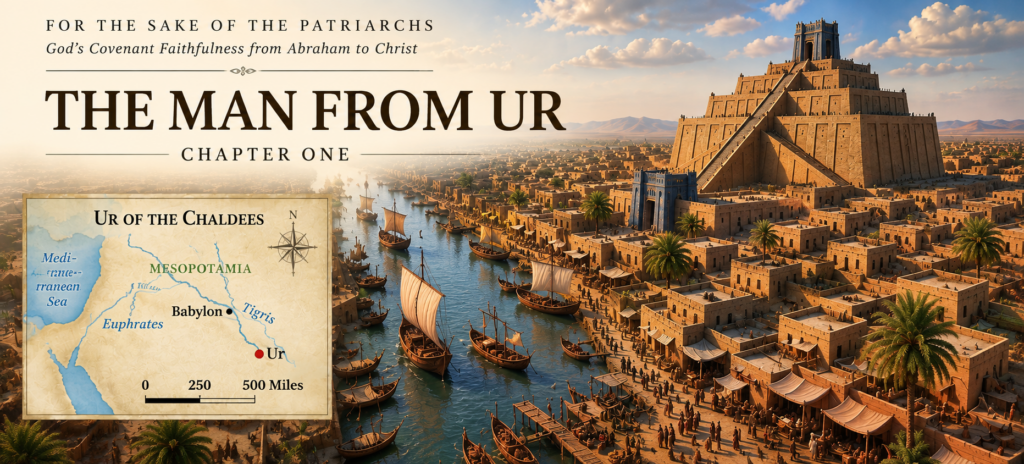
For the Sake of the Patriarchs — 02
From Chapter One: The Man From Ur
In our first article, we met Abram as a man from Ur—one of the great cities of the ancient world.
But what did that world actually look like?
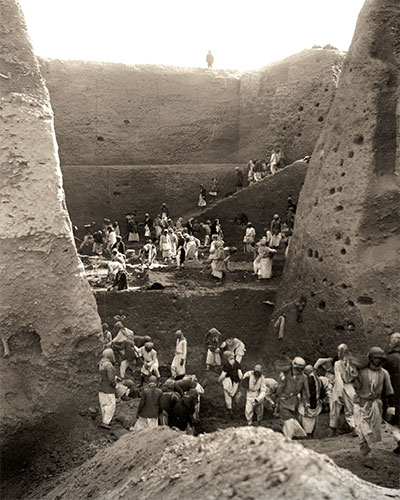
Archaeology allows us to move beyond the monuments and enter something resembling everyday life. It cannot show us Abram’s house or identify the street he walked down. But it can take us remarkably close to the kind of world in which he and his family lived.
Excavations at Ur uncovered residential districts of tightly packed mudbrick houses separated by narrow streets and lanes. Some of the larger homes contained numerous rooms arranged around central courtyards, with spaces for cooking, sleeping, storage, household work, and family life.
Within houses like these, generations lived together. Children were born. Meals were prepared. Business was conducted. Marriages were arranged. Servants worked. Relatives came and went.
Genesis gives us no description of Abram’s home. We do not know whether Terah’s family occupied a large residence, a modest dwelling, or something in between. Archaeology cannot point to a doorway and tell us that Abram walked through it.
But it can reconstruct the physical world surrounding him.
And that world was remarkably developed.
A World Beyond Ur
Ur’s prosperity depended partly upon something the city did not possess.
Southern Mesopotamia provided rich agricultural land, but many of the raw materials required by an advanced civilization had to come from elsewhere. Timber, metals, precious stones, and other valuable materials traveled considerable distances before reaching the city.
The evidence of that trade still survives in its ruins and graves.
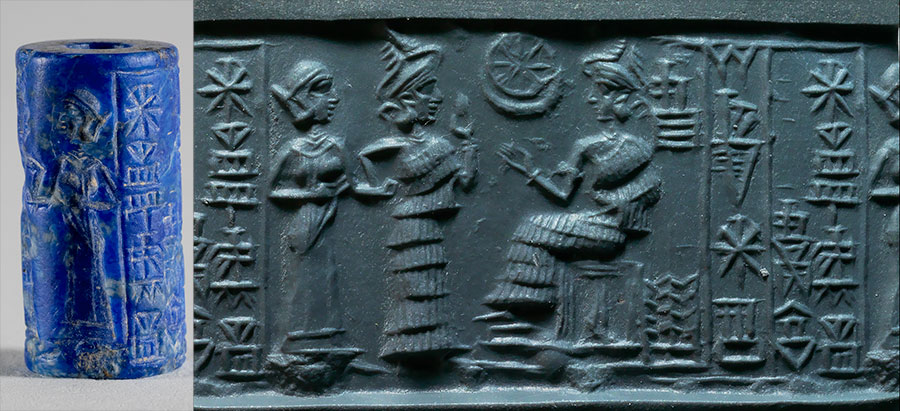
Lapis lazuli arrived through trade networks reaching toward Afghanistan. Copper came from regions around the Persian Gulf, including Oman. Timber came from lands farther north and west. Carnelian and other materials testify to connections extending toward the Indus world.
Ur, then, was not an isolated city.
Caravans traveled overland. Boats moved along rivers and canals. Merchants departed and returned. Foreign goods appeared in workshops and marketplaces. And wherever merchants traveled, information traveled with them.
The people of Ur knew there was a larger world beyond their city.
Abram knew it too.
That is worth remembering when we picture the patriarchs. The world of Genesis was ancient, but ancient does not mean primitive. Abram emerged from a society familiar with commerce, property, contracts, accounting, craftsmanship, travel, and international trade.
The man who would eventually journey toward Canaan came from a world in which people and goods had been moving across great distances for generations.
Yet commerce and architecture tell us only part of the story.
There was something else woven deeply into the life of Ur—something visible above its houses and streets and inseparable from the culture of the city.
To understand Abram’s world more fully, we will have to look up.
Toward the great structure that dominated the skyline.
NEXT: 03 — The City of the Moon God →